
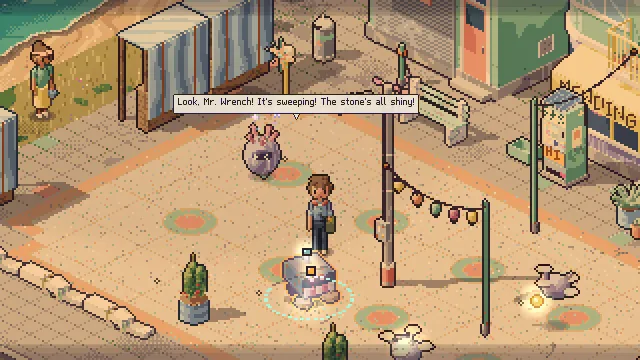
Hijack the thing that was hitting you
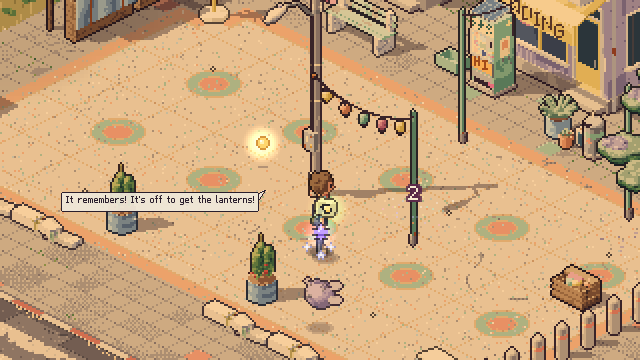
Daze a foe and hold Momo's button: her spark flies in and you drive it for a few seconds. A street sweeper rams its friends; a gull-bot dives over gaps.
In developmentThe prologue and Chapters 1 to 3 play in internal builds

The radio sings. The machines remember.
Summer, 2089. Lightning shatters the memory of Momo, the old AI in Alex's pocket radio, into eight amber chips, and the city's machines pick them up. An isometric action adventure on a pastel cliff by the sea, where your wrench is one hand and the radio is the other.
Coming to Steam. The store page isn't up yet.

Momo
Good morning! Momo is Momo. Who are you? The violet hour. Momo's favourite colour of the day. Momo drove! Momo is a very good driver. It's soft. Momo has never been soft. Can Momo keep it in the radio? A parasol! Momo always wanted to go to the beach. Momo got goosebumps. Momo doesn't even have skin. Mr. Wrench, look. The whole city came out tonight. Momo likes evening. Everything gets long.
The wrench is Alex's hand and Momo is the other. Landing hits and parries charges her battery; she spends it to stun a crowd, or to jump into a dazed foe and drive it into its friends.
The rules are visible in the room. Try an idea safely, and when it works the world holds its breath, the camera shows what changed, and one chime plays.
Aubade is built up a cliff: stairs, rope bridges, viaducts, rooftops. Each chapter's item, the Grabber, the Parasol, the Pocket Watch, opens places you have already seen.
The villains are lonely, slightly over-the-top machines. Each chapter ends in a short memory you understand without anyone explaining it.
Daze a foe and hold Momo's button: her spark flies in and you drive it for a few seconds. A street sweeper rams its friends; a gull-bot dives over gaps.
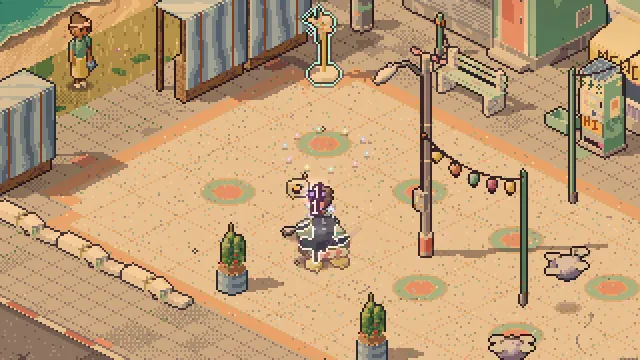
A three-swing combo with a visible wind-up, a charged spin, and a parry that sends shots back at the shooter. Mashing never parries.
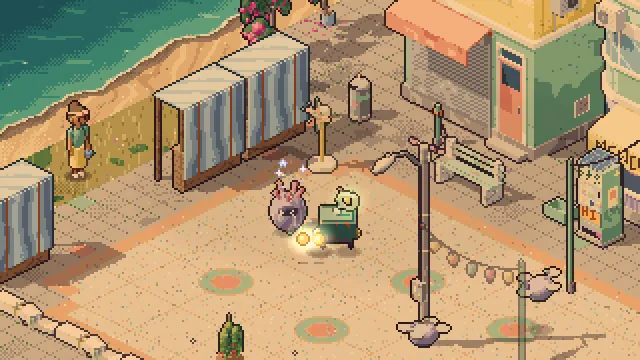
Foes show what they're about to do. A short roll slips through, with no stamina meter, and a counter lands in the gap it leaves.
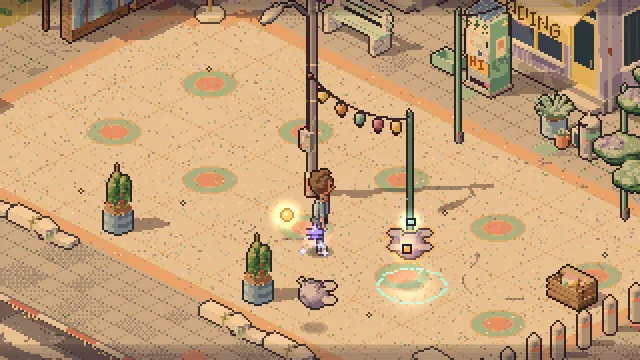
While Momo jumps, a needle sweeps the radio's dial. Let go in the narrow window for a clear tune: a longer drive and the charge back.
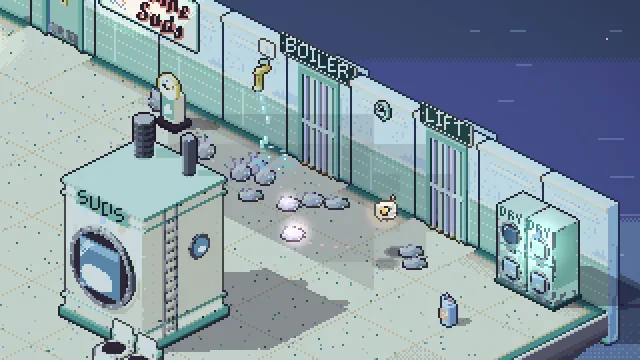
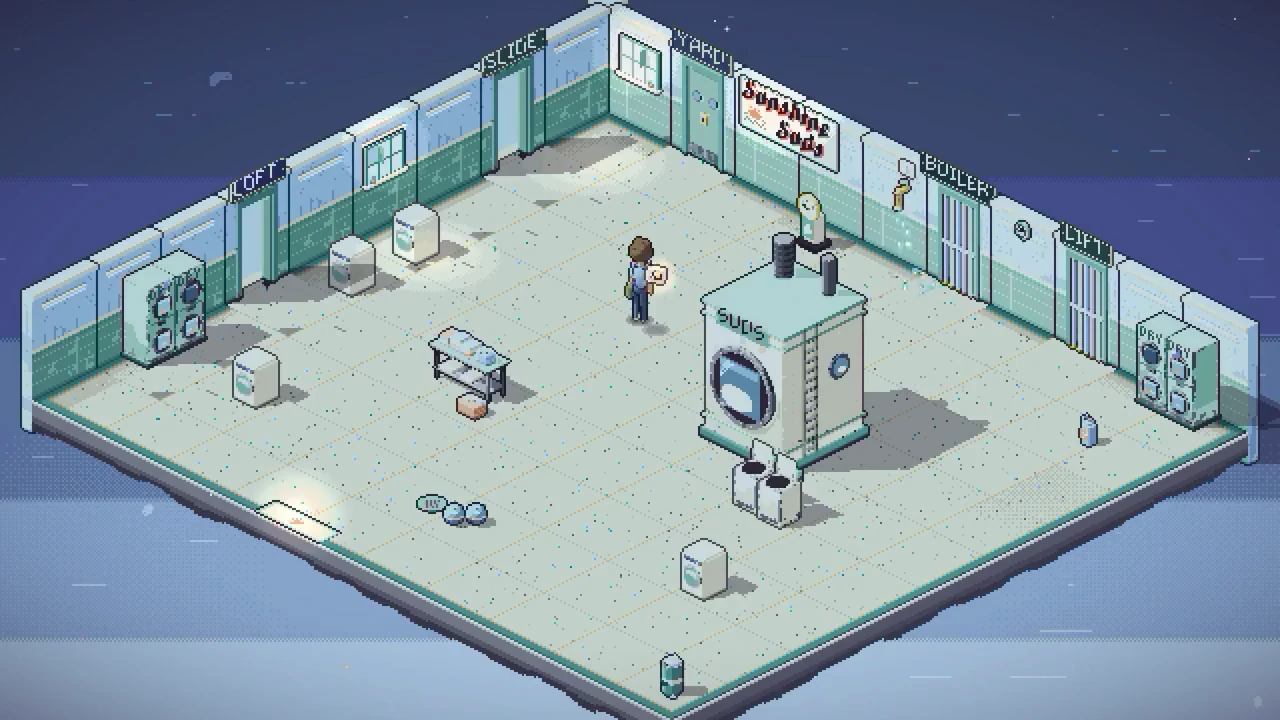
In Sunshine Suds the static comes in waves. Pick who goes first, and use the room: washers, the lift, the boiler door.
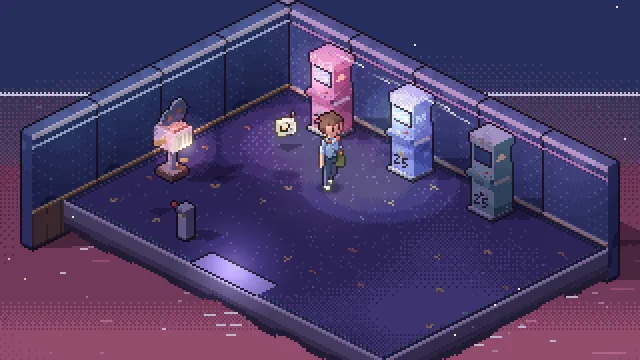
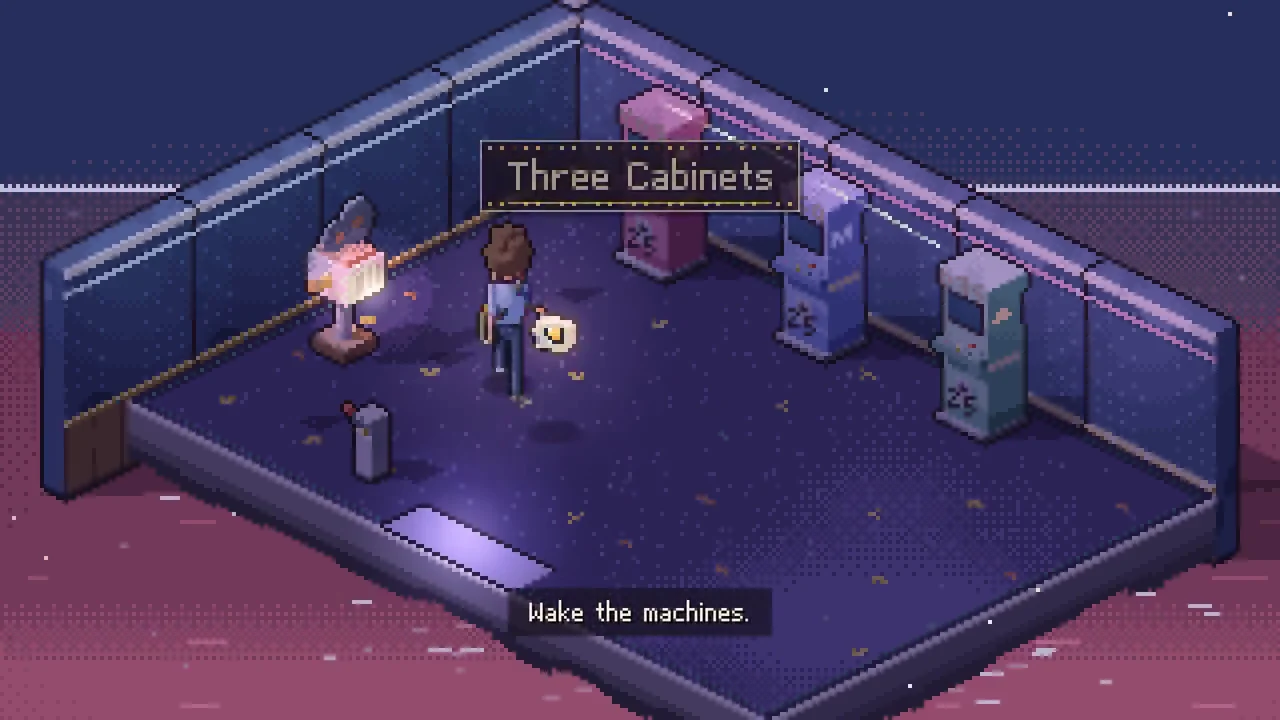
Puzzles are half of the game. In a Signal Box the rule is on screen: Momo tunes the machines awake in as few tries as you can manage.
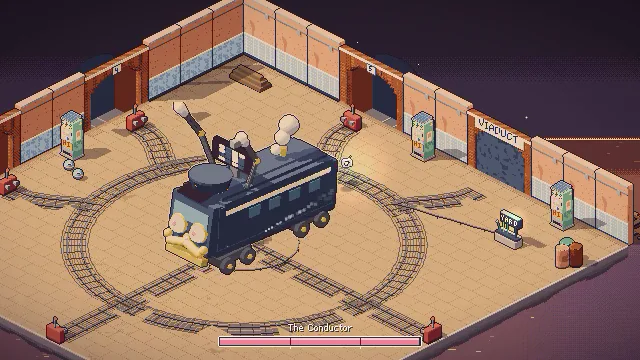
Each chapter ends with a machine king who fights in phases. The Conductor runs the Roundhouse to the second and has never once been late.
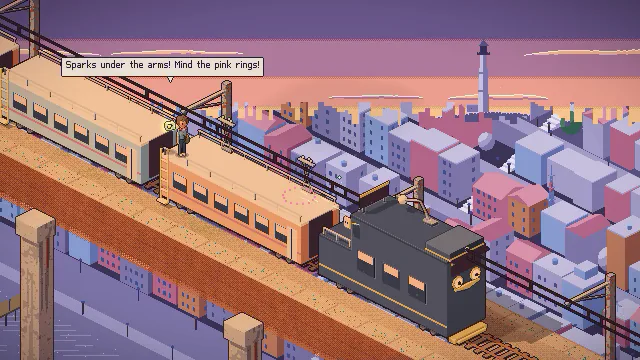
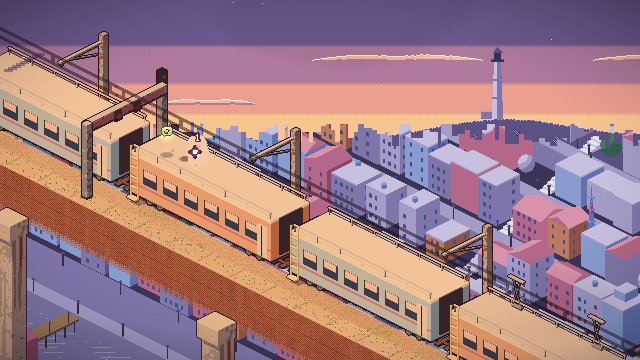
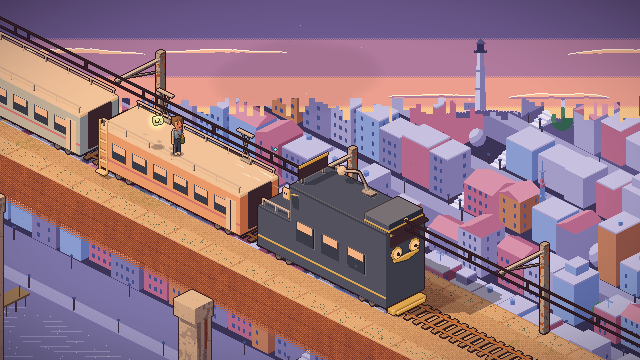
The Conductor's last stand is a run along the train roofs over the Line 9 viaduct at sunset, with the whole of Aubade below.
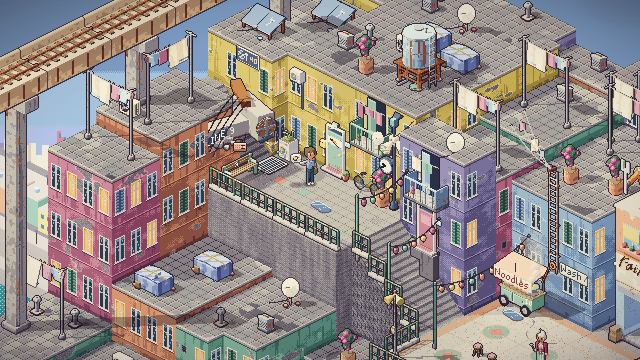
Aubade is a terraced city on a cliff that belongs to no country, in the summer of 2089: pastel concrete, washing lines, sleeping delivery robots, and a violet hour at the end of every day.
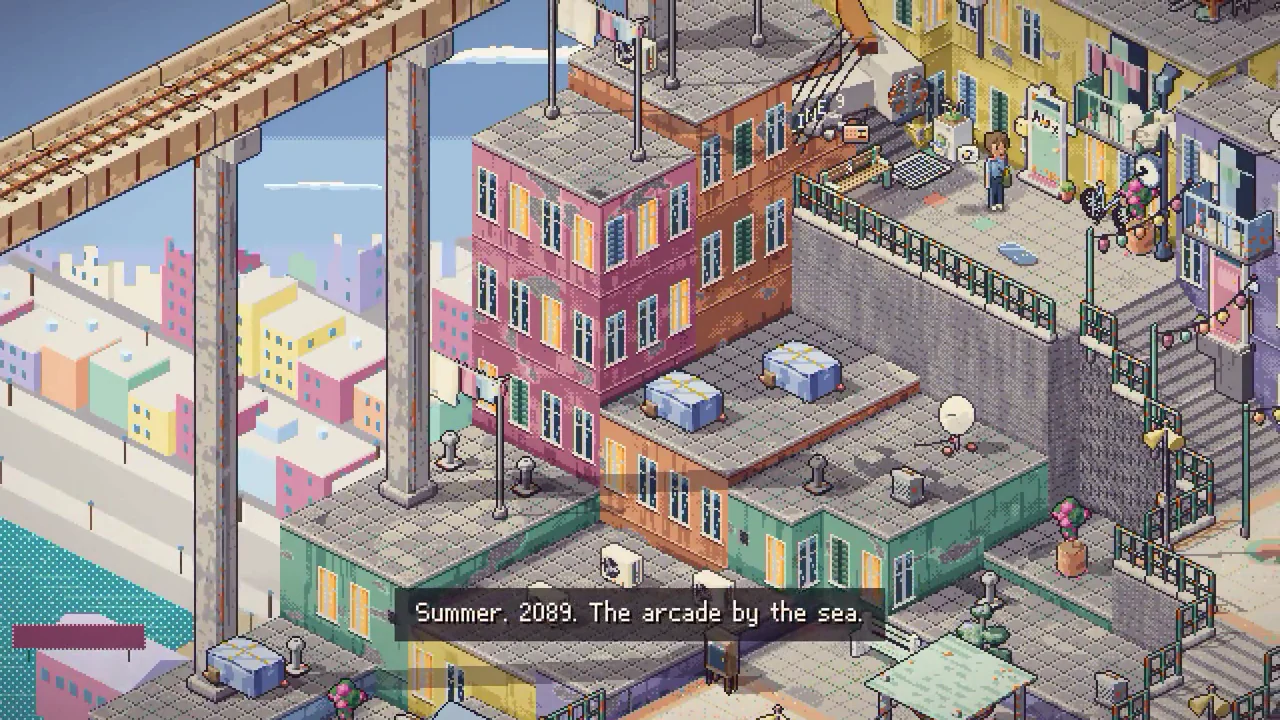
The boardwalk under the Starlight Arcade sign, where the first memory chip came down.
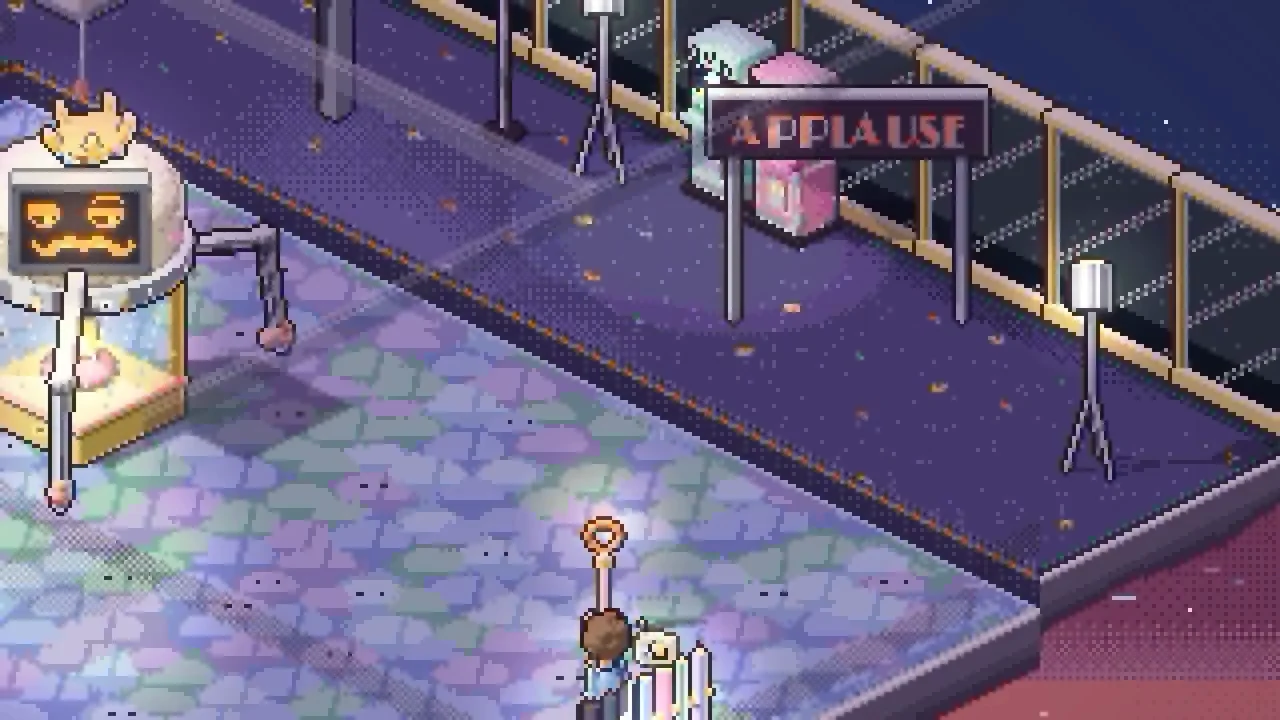
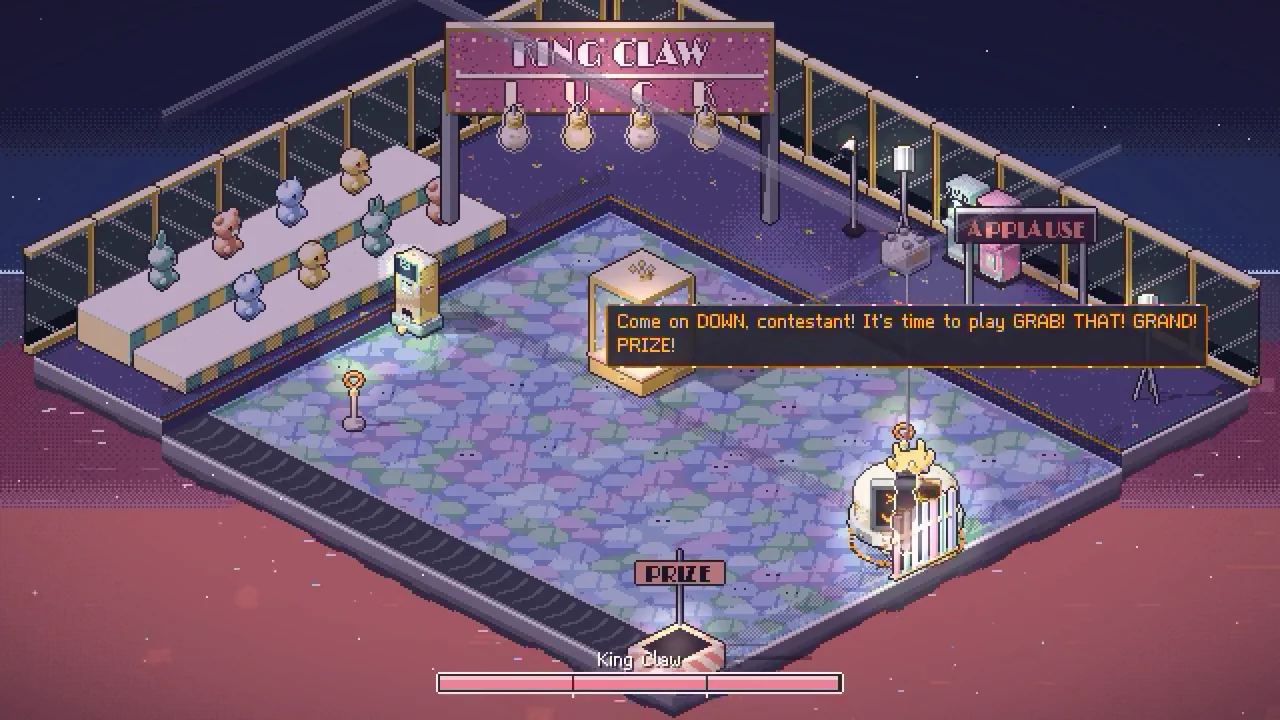
Cabinets, prize walls and a dance floor, kept at a permanent nine at night.
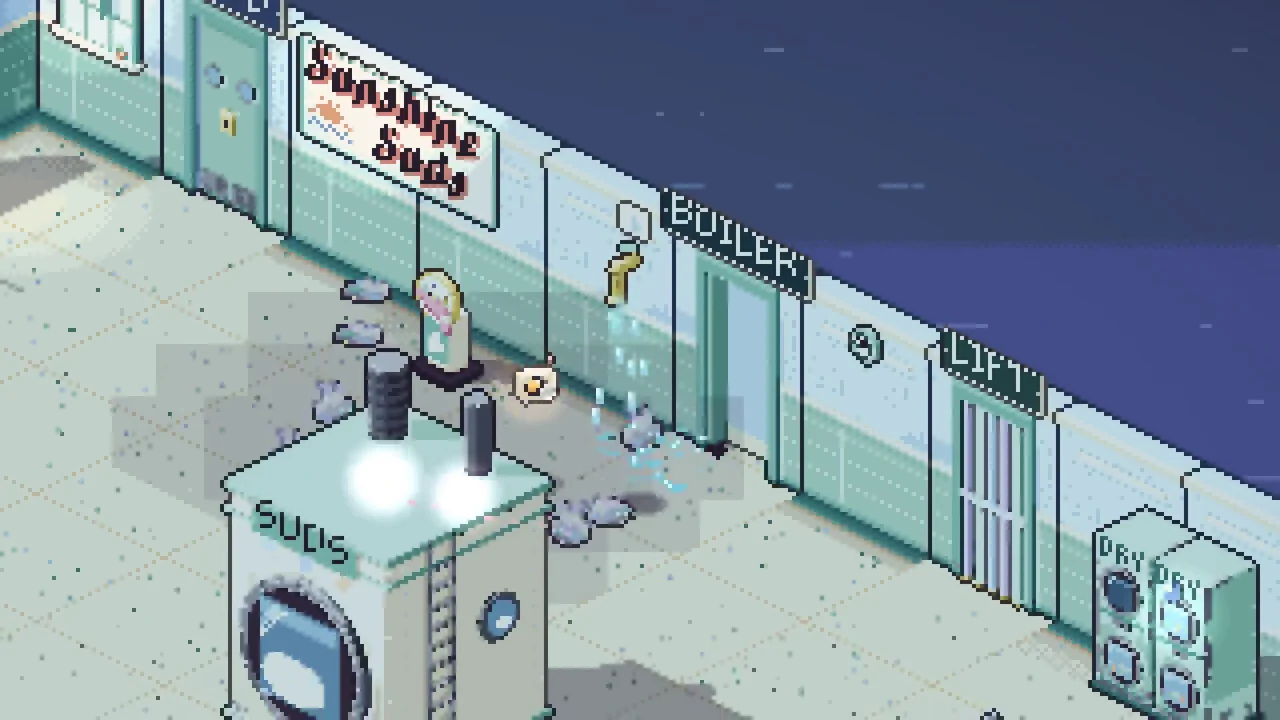
A laundry tower built around one giant drum, with white sheets drying on the roofs above the city.
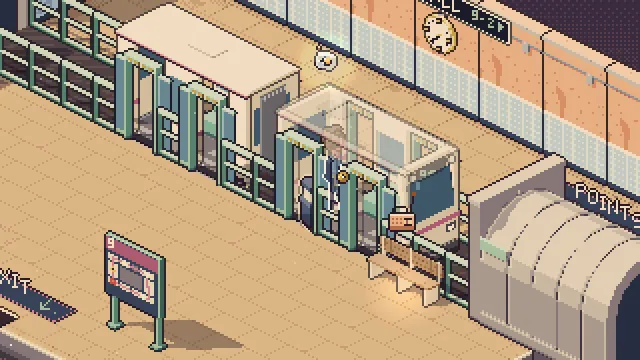
A hot two o'clock rail yard under the viaduct, full of sleeping navy-and-brass trains.
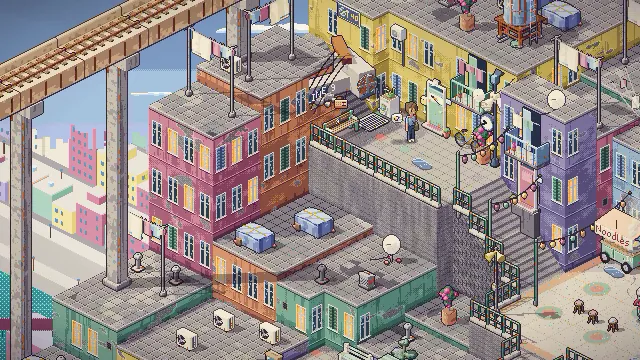
The hub: a cliff of stairs, noodle steam and lanterns under the lighthouse, which changes after every chapter.
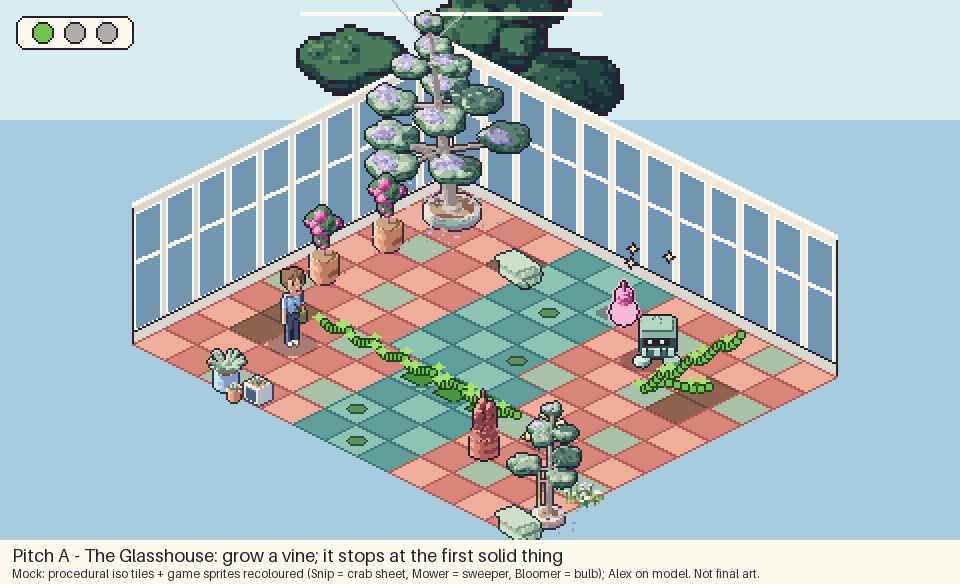 Concept art
A white iron-and-glass palm house on the cliff, and the next chapter: plant a seed and a vine grows until it meets something solid.

Twenty-nine, a repairman with a wrench. Few words, dry jokes.
The old AI in Alex's RX-9 pocket radio. Curious, chatty, and on joke number 812.

Runs the noodle cart on Lantern Steps.

The mechanic at the Fairweather Fix-It, who teaches Alex his moves.

A front-loader diva in a towel turban, and Chapter 2's king.
Last updated
Eight memory chips, one per chapter. Three are playable today.
A locked design bible and a first production wave: punish windows, retry at the door, and the solve beat.
The Pocket Watch, the 60-second timetable, The Conductor and a rooftop chase at sunset.
The Parasol, the WASH, SPIN, DRY tower and Madame Spin. First internal release candidate.
Charged spin, parry, lock-on, the hijack, the Grabber, Bumpo and King Claw.
The wrench combo, dodge roll, hearts, the first foes and Momo's pulse.
Pastel concrete and a violet hour, the AUBADE 2089 wordmark, synthesised sound and a composed score.
Aubade 2089 started on the engine of The Last Summer, as a small adventure on one street.
The next wave: a four-phase ending for The Conductor, and clearer rooms.
The vine, built graybox first, then its art, foes and king.
Real puzzle rooms, less talk, and a distinct palette for each room.
A store page, a new trailer and a demo of the prologue and Chapter 1.
Drafted in the full plan, not yet scheduled.
Every update so far, newest first, written from the game's own release notes and history.
Aubade 2089 is now planned as a balanced Zelda-like: roughly 35% combat, 30% puzzles, 25% exploration and 10% story. Audits of combat, puzzles, level variety and the overall experience became one backlog in five production waves. The first wave built the puzzle core: after every solve the world holds for a breath, the camera shows what changed, and one five-note chime plays.
Eleven small changes: a king's retry skips his intro, the A button never does the wrong thing, opening a chest has its own beat, the pause screen shows your current goal, the dungeon map marks solved rooms, and a crackle warns you on your last heart.
The old cinema chapter was dropped. Of three new pitches, The Glasshouse won because it differs most from the chapters before it: a palm house whose gardener-king prunes everything that grows, and a vine you plant that grows until it meets something solid.
When Momo jumps into a foe, a needle now sweeps the radio's dial. Release it in the narrow window for a clear tune, a longer drive and charge refunded, or in the wide one for a fuzzy tune. A clear tune is a reward, never a gate.
A whole chapter on rails: a ghost train over the Steps, a rail yard at two in the afternoon, and a Roundhouse running on a 60-second timetable locked to the music. Big Pip's Pocket Watch holds trains and foes still. It ends with The Conductor and a rooftop chase at sunset.
Cassettes recorded long ago by Alex's mother, as a child, can now be found and played around the city.
The lightning strike was restaged as the moment everything starts, there are three save files, the claw machine became a toy you can actually play, every move now has a teacher, and King Claw's finale became a staged three-blow beat.
A laundry tower run by a WASH, SPIN, DRY dial, eight new foes from the laundry, and the Parasol: block, reflect, glide and ride updrafts. Madame Spin is a rhythm boss who attacks on her aria's beats.
The charged spin, the parry, Momo's battery, lock-on and the hijack, with the Grabber and five new foes. The Arcade and King Claw's game show were built in grey boxes and given their art the same day.
Two days in, Aubade 2089 changed course. The scenes worked; the play didn't. The action core went in that day: wrench combo, dodge roll, hearts, the first three foes, Momo's pulse and props to break.
Pastel concrete, bougainvillea and a violet hour; the AUBADE 2089 wordmark and two pixel fonts; every sound synthesised from scratch, and a score in the spirit of the Ghibli films.
There's nothing to buy yet, and no date. New teasers go up on YouTube first, and anything playable will land on itch.io and Steam.